


Mechanical Pipe Plugs for Testing, Blocking, and Cleanout Applications
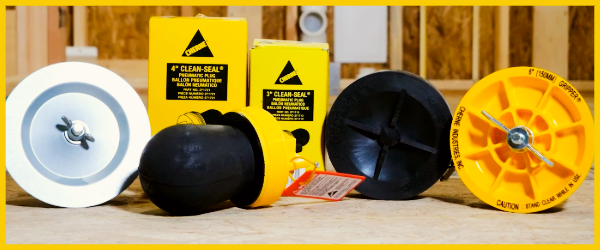
A damaged cleanout that will not seal, an open pipe that needs to be blocked for a stack test, and a hub that needs temporary isolation may all call for a mechanical pipe plug—but not the same one.
That is why Cherne makes so many different mechanical plug designs. Some seal directly in a cleanout. Others grip inside the pipe or at its end. Hub-Fit plugs are shaped for bell and hub openings, while bypass models create a seal without taking away access through the center of the line. RTO offers these different styles because mechanical pipe plug selection is often less about finding “a plug that fits” and more about where the seal actually has to be made and what needs to happen at that point in the system.
Where the Plug Has to Seal Changes the Design
Cleanouts are a good example. If the threads are worn or damaged, getting a conventional threaded cap to seal can become the problem itself. Cherne Clean-Out Grippers use a threaded rubber sealing element that can seal against many damaged cleanout threads, giving the crew another way to close the opening for testing or maintenance without first rebuilding the cleanout.
Move that sealing point to the end of an open pipe and the design changes. End-of-Pipe Grippers sit at the pipe opening and are commonly used for DWV and stack testing. Inside-of-Pipe Grippers move the seal farther into the line when the opening itself is not where the plug needs to sit.
A hub presents another problem again. The larger bell-shaped opening does not have the same geometry as the straight pipe bore, which is why Hub-Fit Grippers are shaped specifically for hub and bell-end connections.
These are all mechanical plugs, but the part of the piping system they are designed to seal is what makes them different. Sometimes the Plug Needs to Do More Than Block. A solid mechanical plug works when the goal is simply to stop or isolate the line. Testing and maintenance work can require access through the plug itself.
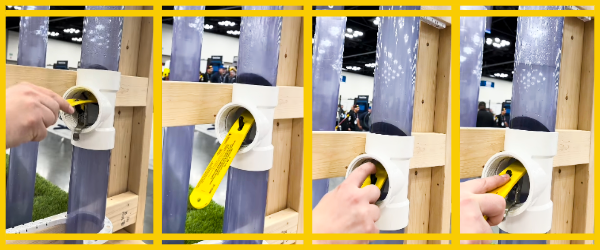
That is where bypass designs become useful.
Cherne Iron Grip Bypass and T-Handle Gripper Bypass plugs create a mechanical seal around the pipe while leaving an opening through the center. That opening can be used for low-pressure testing, pressure relief, drainage, controlled flow, or other work that still requires access to the line after the plug is installed.
This changes how the plug fits into the job. Instead of removing the plug whenever the crew needs access to the system, the bypass becomes part of the test or maintenance setup. T-Handle Grippers are also available without bypass, so the same general plug style can be used when a solid mechanical seal is all that is required.
Installation Style Matters in Tight Spaces
Mechanical plugs are simple compared with many pipe-isolation systems, but the way they are tightened and handled can still matter when access is limited.
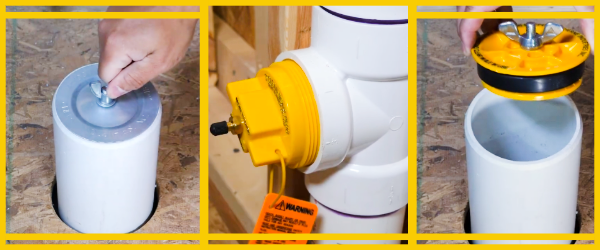
End-of-Pipe Grippers and other wing-nut designs use oversized hardware that can be tightened without bringing additional tools into the opening. Sure-Grip plugs are also designed for tool-free installation, which can be useful for stub-outs, plumbing tests, and other locations where there is little room to work.
T-Handle Grippers take a different approach. The steel handle gives the installer more control over positioning, tightening, and removal, particularly on larger plugs or in applications where reaching the plug body directly is less convenient.
These differences are easy to overlook when plugs are compared only by pipe size, but installation becomes much more important once the crew is working inside a cleanout, at a wall penetration, or in another restricted area.
Iron Grip and Sure-Grip Solve Different Testing Problems
Iron Grip and Sure-Grip plugs both show up in plumbing and testing work, but they are not simply two versions of the same plug.
Iron Grip plugs are built for low-pressure water or air testing and bocking applications. Bypass versions add a center opening for pressure relief or test access while the plug remains installed.
Sure-Grip plugs are smaller, tool-free mechanical plugs commonly used for water or air testing and for blocking stub-out lines temporarily or permanently.
For a contractor, the distinction comes down to the way the test is being set up, the pipe size involved, and whether the line needs a solid seal or continued access through the plug.
Chemical Exposure Changes the Sealing Material
Most mechanical plug jobs involve ordinary plumbing, sewer, drain, or maintenance systems. Petroleum products and other aggressive fluids introduce another consideration.
Econ-O-Grip plugs provide a straightforward option for low-pressure blocking and open-ended pipe applications. Petro Econ-O-Grip plugs are designed for similar work but use chemical-resistant materials for environments where standard rubber compounds may not be appropriate.
T-Handle Grippers also use chemical-resistant neoprene O-rings, making material compatibility relevant for longer-term blocking or bypass applications. The important point is that a plug can be the correct size and style and still be wrong for the line if the sealing material is not compatible with what is flowing through it.
Pressure and Restraint Still Matter
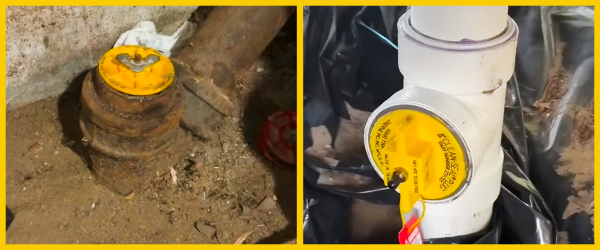
Mechanical installation does not eliminate the force created by pressure behind a plug.
Before use, the crew should confirm the plug’s pressure rating, inspect the sealing element and hardware, and make sure the pipe or fitting provides a clean surface for the plug to grip and seal against. Any plug exposed to back pressure also needs appropriate restraint, and personnel should stay clear of the potential ejection path while the system is pressurized. The sealing mechanism may be simple, but the pressure behind the plug still has to be treated seriously.
Choosing the Mechanical Plug That Fits the Actual Opening
Mechanical pipe plugs are useful because there are designs for very specific sealing points and testing conditions.
A damaged cleanout may call for a Clean-Out Gripper. An open pipe end may use an End-of-Pipe or Econ-O-Grip design. A hub or bell connection has its own Hub-Fit option. A test setup that still needs access through the line may require an Iron Grip or T-Handle bypass plug. Petroleum or chemical exposure may change the sealing material entirely.
For help selecting Cherne mechanical pipe plugs for DWV testing, stack testing, cleanouts, low-pressure blocking, bypass, or maintenance work, contact RTO with the pipe or fitting size, sealing location, expected pressure, and application.