


Nemo cordless underwater tools for commercial diving and marine work
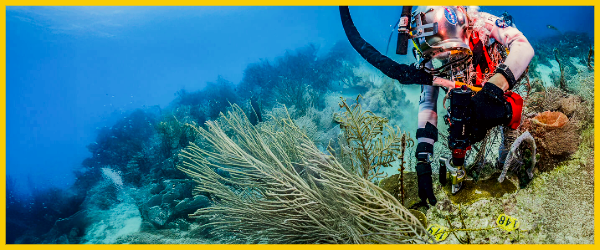
Sometimes the biggest advantage underwater is simply having one less hose to manage.
Hydraulic and pneumatic tools are proven choices for demanding underwater work, but they also tie the diver back to the surface equipment. For a defined repair, installation, fastening, cutting, grinding, or cleaning task, a cordless tool can simplify the dive by putting the power source in the diver's hands.
That is where Nemo power tools fits. Nemo builds battery powered drills, impact tools, grinders, saws, hole cleaners, lights, and other equipment specifically for submerged work. The real value is not that the tools are cordless. It is that they give crews another way to handle jobs where mobility and direct access matter more than continuous surface-supplied power.
When Removing the Hose Actually Helps
Cordless makes the most sense when the diver needs powered equipment intermittently rather than continuously.
A diver moving between attachment points, working around hole components, reaching into a difficult area, removing several fasteners, drilling a limited number of holes, or making a localized cut may gain more from mobility than from a surface powered tool system.
That can also reduce mobilization. If the job only requires a short period of powered work, the crew may not need to set up a hydraulic power unit or compressed air system solely for that task. The tradeoff is sustained workload. Continuous grinding, prolonged cutting, repeated heavy hammer drilling, or other high duty cycle work can push battery demand high enough that hydraulic or pneumatic power becomes the more practical choice.
So, the decision is not simply cordless versus hydraulic or pneumatic, it is whether removing the hose improves this particular dive enough to justify working from batteries.
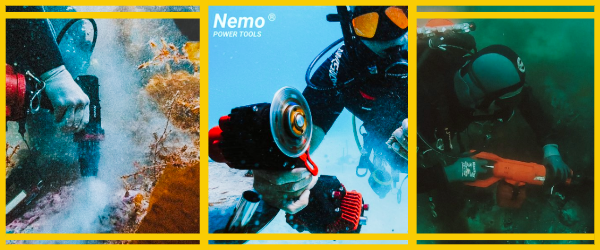
Nemo Tools Need to Be Prepared for the Dive
One of the more important differences between Nemo tools and ordinary cordless equipment is that the underwater setup starts before the diver enters the water.
Nemo uses sealed housings and model-specific underwater systems, and certain tools require pressurization before submersion. Nemo's dive checklist instructs crews to inspect the tool body, battery connections, housing, seals, and controls before the dive and to add the model-specific air pressure shortly before the tool is submerged. The exact procedure and required pressure depend on the tool.
That makes preparation part of the tool operation.
A Nemo drill, grinder, or rotary hammer should not simply be pulled from the case, fitted with a battery, and taken underwater. The crew needs to follow the manual for the exact model, inspect the sealing and battery interfaces, and prepare the tool for the planned dive. For a commercial crew, that is worth knowing before mobilization because the pump, pressure procedure, battery condition, and tool inspection all belong in the setup.
Battery runtime depends on how the tool is used
Battery runtime underwater is not a useful number by itself. A diver drilling a handful of holes or removing several fasteners may place relatively low demand on the battery. Sustained grinding, repeated hammer drilling, or long cutting cycles can consume substantially more power. Nemo's own angle grinder guidance illustrates this well the manufacturer recommends switching the grinder fully off between cuts to conserve battery power and using discs no longer than 5 inches and no thicker than 3/32 inch to reduce underwater drag.
Battery planning should be based on the workload, not just the length of the dive. Consider what the tool will be doing, how continuously it will run, and how demanding the material or application is. A few holes or fasteners may require relatively little battery capacity, while sustained use under load can drain a battery much faster. For longer or more demanding work, charged spare batteries would need to be part of the dive plan.
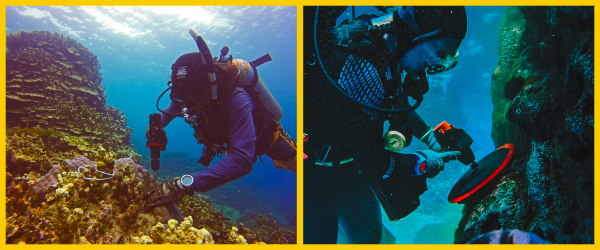
Saltwater Use Does Not End When the Tool Comes Out of the Water
Cordless underwater tools also create a post-dive maintenance requirement that should not be treated casually.
Nemo instructs users to rinse tools with fresh water after saltwater use, dry them thoroughly before storage, and inspect the tool and battery connections after the dive. The manufacturer specifically warns that storing tools or batteries while still wet can cause deterioration over time.
Battery interfaces and seals also deserve attention. Nemo’s drill manual instructs users to verify that the battery O-rings are present and undamaged before installation because compromised seals can allow water into the tool or battery. For the angle grinder, Nemo additionally recommends clearing trapped water from the battery connection after use to help prevent terminal corrosion.
That means a Nemo tool should be treated as an underwater system, not simply a waterproof version of a standard cordless tool.
The complete Setup Matters Just as Much as the Tool
A successful cordless setup includes more than the tools itself.
Before the dive, the crew should know:
- The exact model and working-depth rating
- Which battery generation it uses
- Whether charged or spare batteries are needed
- Which bit, socket, blade, wheel, brush, or other attachment is required
- Whether the tool needs to be pressurized before the submersion
- What inspection and post-dive maintenance procedures apply
Nemo recommends matching the task, material, working depth, battery, attachment, and expected duty cycle to the exact model and generation being used. That matters because two Nemo tools may perform similar work while requiring different batteries, accessories, depth limits or preparation procedures.
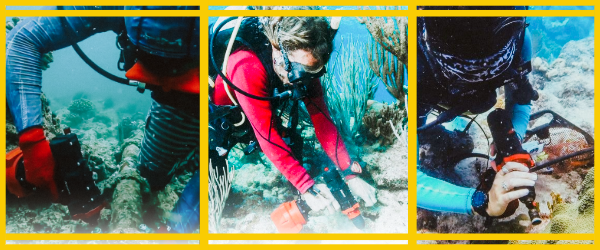 Where Nemo Cordless Tools Fit Best
Nemo cordless underwater tools are most useful when the job benefits from a compact, self-contained power source and the workload does not require continuous surfaced supplied power.
That may include commercial diving repairs, underwater installation, fastening, drilling, localized cutting or grinding, hull maintenance, pool and marina work, inspection support, and other jobs where the tool is needed for part of the dive rather than the entire operation.
The advantage is not simply convenience. It is giving the diver another way to work when hose management, access or mobilization would otherwise make a relatively small task more complicated than it needs to be.
RTO carries Nemo underwater drills, impact tools, grinders, saws, hull cleaners, lights, batteries, chargers, and related accessories and is an authorized Nemo repair center. Contact RTO to discuss the job, working depth, expected workload, and complete tool setup before deployment.