


Pneumatic Tools for Marine Cutting and Drilling

Pneumatic cutting and drilling tools are used when contractors need air-powered equipment for marine, hazardous-location, confined-space, or underwater-capable applications. RTO offers pneumatic options for concrete cutting, pipe cutting, core drilling, magnetic drilling, and other work where electric tools may not be the best fit.
The best starting point is simple: what material needs to be cut or drilled, and what air supply is available on site? A concrete chain saw, PowerGrit chain saw, core drill, and magnetic drill all run on compressed air, but they solve very different problems.
Some pneumatic tools are built for underwater use, while others are better suited for wet drilling, hazardous environments, confined spaces, or industrial cutting and drilling. Confirming the intended use before selecting a tool helps avoid planning a job around the wrong equipment.
What Are Pneumatic Tools?
Pneumatic tools use compressed air supplied through hoses and fittings. For marine cutting and drilling work, that means the tool selection depends not only on the material, but also on the available air supply, hose setup, fittings, and tool configuration.
Common pneumatic cutting and drilling options include concrete chain saws, PowerGrit chain saws, pipe cutting tools, core drills, and magnetic drills.
Cutting and Drilling Applications
Pneumatic tools can support several types of marine, industrial, and underwater-capable work.
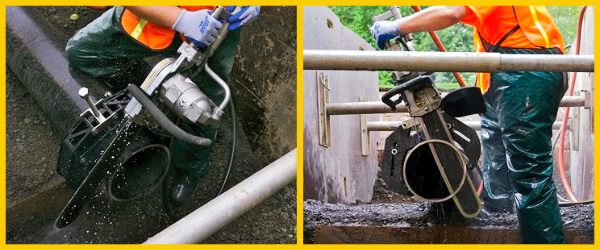
Concrete chain saws are used for deep cutting, plunge cutting, and controlled openings in concrete or reinforced materials. They are useful when contractors need square corners, reduced overcutting, or access in wet or confined conditions.
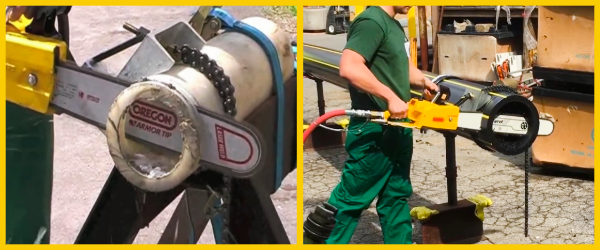
PowerGrit chain saws and pipe cutting tools are more specialized. They are designed around ductile pipe, cast iron, and pipe-focused cutting applications. Pipe material, pipe size, wall thickness, and access around the cut should be confirmed before selecting the tool.
Pneumatic core drills are used when the job requires a clean, round opening through concrete, masonry, walls, floors, ceilings, or similar materials. Hole diameter, drilling depth, bit selection, mounting method, and air requirements all matter.
Pneumatic magnetic drills are used for drilling into steel and other suitable ferrous surfaces. With magnetic drills, the surface condition and holding setup matter as much as the drilling capacity. The crew should confirm material thickness, cutter size, coolant requirements, and working position before choosing the tool.
In practice, the tool choice usually comes down to the result needed: a deep concrete cut, a pipe cut, a clean round hole, or a drilled hole in steel.

A Common Mistake When Selecting Pneumatic Tools
One common mistake is treating “pneumatic” as the full answer. Compressed-air power is only one part of the decision. The tool still needs to match the material, jobsite conditions, air supply, and required cut or hole.
A pneumatic concrete chain saw may be right for deep concrete cutting. A PowerGrit chain saw may be better for ductile pipe or cast iron. A core drill may be the better choice for clean round openings. A magnetic drill may be needed for steel.
The best tool choice starts with the job itself: what needs to be cut or drilled, where the work is happening, and what air supply is available.
What Contractors Should Confirm
Before renting or purchasing a pneumatic cutting or drilling tool, contractors should confirm:
- Whether the tool is intended for underwater use, underwater-capable work, hazardous environments, confined spaces, or general industrial use
- Material being cut or drilled
- Required cutting depth, pipe size, or hole diameter
- Required air supply, including CFM and PSI
- Hose and fitting compatibility
- Blade, chain, cutter, or bit requirements
- Working clearance around the cut or drilling location
- Whether the tool is available for rent, purchase, or both
These details help determine whether the job calls for a concrete chain saw, pipe cutting tool, core drill, magnetic drill, or another pneumatic option.
Contractors should also confirm whether blades, chains, core bits, cutters, coolant, water-feed equipment, or other consumables are included, rented separately, or purchased separately.
When Pneumatic Tools Make Sense
Pneumatic tools make sense when the crew can support the tool with the required air supply and the application calls for cutting or drilling in a marine, confined, hazardous, or underwater-rated environment. The important step is confirming the tool, accessory, and air requirements before the job is scheduled.
If you have questions about pneumatic tools for marine cutting, drilling, or underwater-capable work, contact RTO to discuss your project requirements.