


Underwater Hydraulic Chipper and Breaker Guide for Marine Demolition
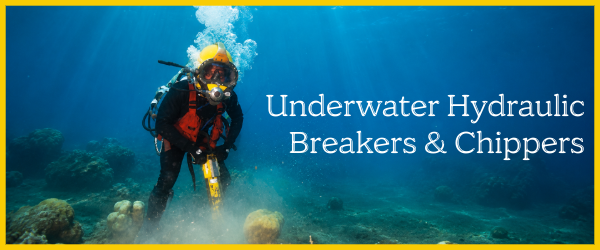
Underwater hydraulic chippers and breakers are used by commercial divers, marine contractors, utility crews, and underwater maintenance teams for concrete removal, rock breaking, coral removal, scaling, chipping, rod driving, and demolition work below the waterline. These tools are commonly used in marine construction, bridge and pier repair, harbor maintenance, dam work, underwater demolition, and infrastructure repair where electric tools may not be practical. RTO offers underwater hydraulic chipper and breaker rental options for short-term and project-based work.
One of the first questions we ask about an underwater chipping or breaking project is: how much material needs to be removed, and how much control does the diver need? A small scaling job, a confined concrete repair, and a heavy demolition task may all involve hydraulic percussion tools, but they do not require the same size tool.
What Are Underwater Hydraulic Chippers and Breakers?
Underwater hydraulic chippers and breakers are hydraulically powered percussion tools designed for chipping, scaling, breaking, and demolition work in submerged or wet environments.
Both tool types use hydraulic impact energy to remove hard material below the waterline. They can be used for underwater concrete removal, marine repair, demolition, rock work, and maintenance tasks where a diver needs a durable tool that can operate reliably in wet or submerged conditions.
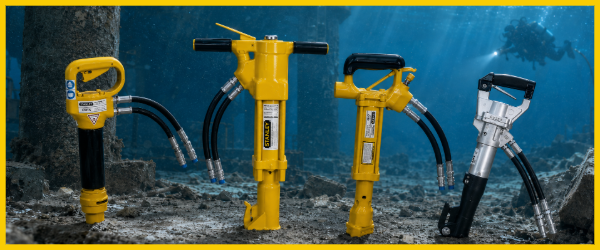
Common tool types include underwater hydraulic chipping hammers, light-duty breakers, medium-duty breakers, heavy-duty breakers, T-handle breakers, and D-handle chipping hammers.
Chippers vs. Breakers: What Is the Difference?
Underwater hydraulic chippers and breakers are similar because both use hydraulic impact energy to remove hard material. The difference is usually the size of the job and the level of control needed.
A hydraulic chipping hammer is typically the better choice when the work requires precision, mobility, and controlled material removal. Chippers are commonly used for scaling, surface preparation, light concrete removal, masonry work, and repair areas where the diver needs to work carefully around an existing structure.
A hydraulic breaker is usually the better choice when the job requires more impact energy. Breakers are used for heavier concrete breaking, rock removal, coral removal, rod driving, and larger underwater demolition tasks where material removal volume is more important than fine control.
In practical terms, a diver cleaning up deteriorated concrete around a pier repair may be better served by a chipping hammer. A crew breaking larger sections of concrete or rock below the waterline will usually need a breaker.
A good rule of thumb is this: use a chipper when control matters most, and use a breaker when impact energy matters most.
What Are Underwater Hydraulic Chippers and Breakers Used For?
Underwater hydraulic chippers and breakers are used across marine construction, underwater demolition, infrastructure repair, harbor maintenance, and commercial diving work.
Common applications include:
- Concrete removal
- Rock breaking
- Coral removal
- Scaling concrete, masonry, rock, or metal surfaces
- Bridge, pier, and dock repair
- Dam and harbor maintenance
- Marine infrastructure repair
- Rod driving and light anchor work
- Surface preparation before repair or installation
The tool choice should follow the actual work. Light chipping, surface scaling, and selective repair usually call for a smaller chipping hammer. Heavier demolition, larger concrete removal, rock breaking, or rod driving usually requires a hydraulic breaker.
Choosing the Right Underwater Chipper or Breaker
The best tool choice usually comes down to three questions: how hard is the material, how much needs to be removed, and how much control does the diver need?
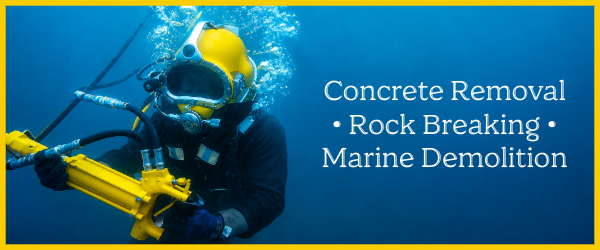
For smaller repair areas, surface preparation, and selective concrete removal, an underwater hydraulic chipping hammer is often the more practical choice. It gives the diver better control in confined spaces and can be easier to manage during longer periods of chipping, scaling, or cleaning work. For heavier demolition, rock breaking, coral removal, or rod driving, an underwater hydraulic breaker is usually the better fit. Breakers deliver more impact energy and are better suited for larger removal tasks, but they also bring more size and weight to the job.
The most powerful tool is not automatically the best tool. If the diver cannot comfortably position the tool, hold the bit on the work surface, or control the start of the blow, the job can become slower instead of faster.
When Should You Rent an Underwater Hydraulic Chipper or Breaker?
Underwater hydraulic chippers and breakers are specialized tools that may only be needed for a specific phase of a project.
Rental can be practical for bridge and pier repair, dock maintenance, underwater concrete removal, harbor work, dam repair, rock breaking, coral removal, utility work, marine construction, and short-term underwater demolition projects. It can also make sense when a project requires multiple tool sizes. A crew may need a compact chipping hammer for controlled removal in tight areas and a larger breaker for heavier demolition work.
RTO helps contractors access underwater hydraulic chipper and breaker options based on material, removal requirements, jobsite access, and hydraulic system compatibility.
What Should Contractors Consider Before Renting?
Before renting an underwater hydraulic chipper or breaker, contractors should consider:
- Material being removed or broken
- Whether the work is chipping, scaling, demolition, breaking, or rod driving
- Required impact energy
- Tool weight and diver handling
- Working position and available access
- Bit shank size and bit style
- Hydraulic flow and pressure requirements
- Hose and coupler compatibility
- Hydraulic system compatibility
These details help determine whether the job is better suited to a compact chipping hammer, a light-duty breaker, a medium-duty breaker, or a heavier hydraulic breaker.
Supporting Underwater Concrete Removal and Demolition
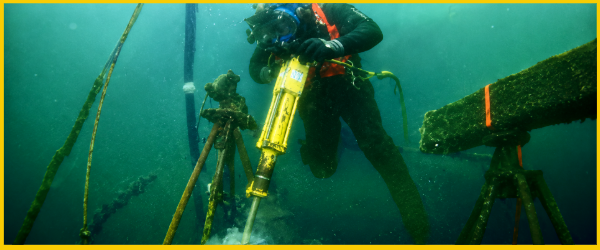
Underwater chipping and breaking work can involve very different levels of force, access, and control. A compact chipping hammer that is well suited for selective concrete removal may not be the right choice for heavier rock breaking or large-scale demolition.
The best starting point is identifying the material, the amount of removal required, the working access, and the hydraulic setup available for the job.
Selecting the correct chipper or breaker, bit style, and hydraulic power source helps crews work more efficiently and gives contractors a better chance of matching the tool to the actual demands of the project.
If you have questions about underwater hydraulic chippers and breakers or need help selecting the right rental equipment, contact RTO to discuss your project requirements.