


Underwater Hydraulic Grinders for Cutting, Grinding, and Surface Preparation
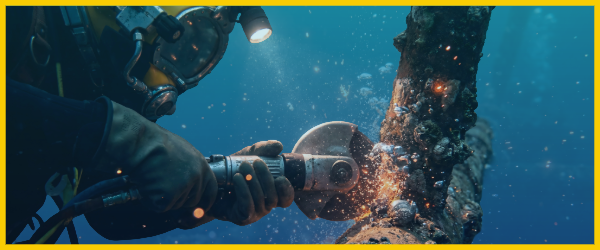
Underwater hydraulic grinders are used by commercial divers, marine contractors, and industrial crews for submerged cutting, grinding, cleaning, and surface preparation. These tools are commonly used in marine maintenance, underwater construction, salvage, offshore repair, and subsea work where electric tools may not be practical. RTO offers underwater hydraulic grinder rental options for short-term and project-based work.
Underwater work often requires tools that can perform reliably in wet, abrasive, and demanding environments. Hydraulic grinders provide controlled power below the surface, helping crews complete cutting, brushing, grinding, cleaning, and material removal tasks with equipment built for professional marine use.
What Are Underwater Hydraulic Grinders?
Unlike standard electric grinders, underwater hydraulic grinders operate from hydraulic flow supplied by a compatible power unit. This makes them practical for commercial diving operations and underwater maintenance work where durability, control, and wet-environment performance are essential.
Many underwater hydraulic grinders are designed for heavy-duty use with larger grinding discs, cutting wheels, brushes, and surface preparation accessories. The correct setup depends on the material being worked, the required finish, and whether the crew is cutting, grinding, cleaning, or preparing a surface for repair.
What Are Underwater Hydraulic Grinders Used For?
Underwater hydraulic grinders are commonly used for heavy-duty cutting, grinding, cleaning, and surface preparation in submerged environments. They are especially useful when divers need aggressive material removal on steel, concrete, and marine structures.
Common applications include:
- Grinding steel surfaces underwater
- Cutting or trimming submerged materials
- Removing coatings, corrosion, weld slag, or marine growth
- Preparing surfaces for repair, inspection, or installation
- Ship hull maintenance and cleaning
- Offshore platform and subsea structure maintenance
- Pier, dock, and seawall repair work
- Underwater construction and salvage support
In ship hull maintenance, divers may use underwater hydraulic grinders to remove coatings, corrosion, or marine growth from large vertical surfaces. In offshore oil and gas work, these tools may be used to clean welds, grind brackets, or prepare subsea structures for repair or inspection.
Their versatility makes them useful across marine, industrial, and subsea applications where reliable underwater material removal is required.
Why Use Hydraulic Grinders Underwater?
Hydraulic grinders are often preferred underwater because they provide strong torque, reliable power delivery, and compatibility with professional hydraulic power systems. For commercial diving teams, hydraulic tools can be easier to integrate into existing underwater tool setups than electric alternatives.
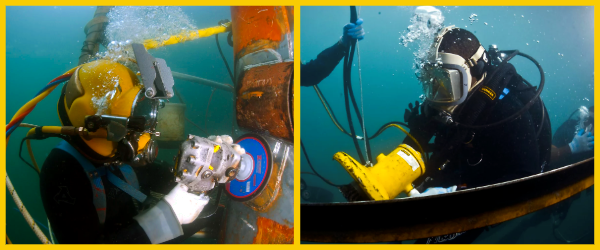
For demanding applications, underwater hydraulic vertical grinders can give divers better control when working on flat, vertical, or overhead surfaces. The vertical configuration can help improve leverage during rough grinding, especially when using larger 9-inch discs for aggressive material removal.
Hydraulic power also supports consistent performance during cutting, grinding, and surface preparation tasks. This matters when working on submerged structures, hulls, pipelines, docks, seawalls, or offshore equipment where tool control and output are important.
In real field conditions, tool performance is not only about power. Crews also need to consider diver handling, visibility, accessory selection, hydraulic hose setup, and how long the tool will be used during the operation. Choosing the right grinder helps reduce downtime and keeps underwater work moving efficiently.
Key Features to Consider
When selecting an underwater hydraulic grinder, contractors should consider the tool size, flow requirements, handle design, guard configuration, and accessory compatibility.
Important features may include:
- Wheel capacity for heavy-duty grinding and cutting
- Adjustable wheel guard for different working angles
- Threaded spindle compatibility for common accessories
- High-torque hydraulic motor for demanding work
- Assist handle for diver control
- Safety lever or guarded trigger for secure operation
- Quick disconnect couplers for field setup
- Compatibility with grinding discs, cutting wheels, brushes, and cleaning attachments
These features help support safe, controlled operation in underwater environments.
What Should Contractors Confirm Before Renting?
Before renting a hydraulic grinder, crews should confirm the tool is compatible with the project requirements and the hydraulic setup available on-site.
Important questions include:
- What material needs to be cut, cleaned, or ground?
- Will the tool be used for surface preparation, cutting, brushing, or coating removal?
- What disc, brush, or attachment is required?
- What hydraulic power unit will be used?
- What flow and pressure range does the grinder require?
- Are the hoses and quick disconnect couplers compatible?
- How much working room will the diver have around the structure?
- Is a backup tool or spare accessory set needed for the project?
These details matter because underwater grinding work can become inefficient quickly if the tool, accessory, and power source are not properly matched.
When Should You Rent an Underwater Hydraulic Grinder?
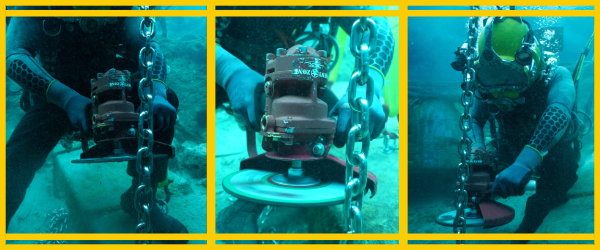
Underwater hydraulic grinders are specialized tools that may only be needed for certain projects. Renting can be a practical option when crews need professional underwater cutting or grinding capability without the cost of purchasing and maintaining equipment.
Rental may be useful for:
- Short-term marine maintenance projects
- Emergency underwater repair work
- Salvage or recovery operations
- Subsea construction jobs
- One-time surface preparation or cleaning tasks
- Projects requiring backup tools or additional grinder capacity
RTO helps contractors access underwater hydraulic grinder rental options based on project requirements. This is especially valuable when a crew needs to match the grinder with the correct hydraulic power unit, hoses, couplers, and accessories.
Pairing Grinders With the Right Hydraulic Power Unit
Underwater hydraulic grinders must be matched with a compatible hydraulic power source. Flow, pressure, hose length, and coupler compatibility all affect tool performance.
If hydraulic flow is too low, the grinder may not perform efficiently. If flow or pressure ratings are exceeded, the tool may be damaged or operate unsafely. Crews should always confirm the required operating range before use.
Before renting or using an underwater hydraulic grinder, confirm:
- Required flow range
- Maximum pressure rating
- Hydraulic hose compatibility
- Coupler type
- Accessory size and rating
- Project depth and working conditions
This is one of the main reasons it helps to work with a rental team familiar with underwater hydraulic tools.
Supporting Underwater Cutting, Grinding, and Surface Preparation
Underwater hydraulic grinders give commercial divers and marine contractors a practical solution for submerged cutting, cleaning, grinding, and repair preparation. With the right tool, accessory, and hydraulic power source, crews can complete demanding underwater work more efficiently.
If you have questions about underwater hydraulic grinders or need help selecting the right rental equipment, contact RTO to discuss your project requirements.