


Underwater Metal Detectors for Search and Recovery
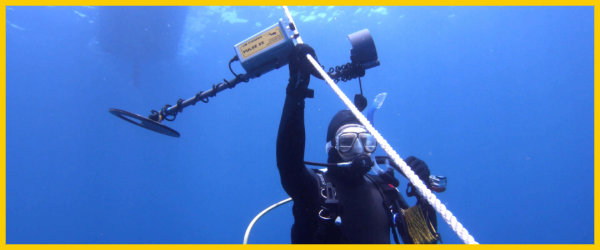
Anyone who has worked around water knows how quickly something can disappear. A tool slips off a dock. A fitting drops beside a vessel. A cable route is not where the drawings suggest it should be. A pipe is buried under silt. Once the target is underwater, the search can become slow, frustrating, and expensive.
Underwater metal detectors give divers and marine crews a way to search with more direction. They do not make the job effortless, and they do not replace experience, but they can help narrow the area, confirm a target, follow a buried utility path, or rule out the wrong location before more time is spent digging, sweeping, or sending divers back over the same ground.
RTO offers underwater metal detector options for commercial diving, search and recovery, utility work, marine construction, salvage support, and underwater inspection projects. The right choice depends on what needs to be found, where the search is taking place, and how the crew plans to search.
When Sight and Touch Are Not Enough
Underwater searches rarely happen in perfect conditions. A diver may be working in dark water, soft bottom, weeds, current, silt, or an area where the target is no longer visible. Even when the crew knows what they are looking for, finding it can take time.
That is where underwater detection equipment becomes useful. Instead of relying only on visibility, touch, or a general search pattern, divers and marine crews can scan for metallic targets and make better decisions about where to focus their time.
The goal is not just to “find metal.” The goal is to make the search more controlled. In some cases, the detector helps locate the target. In other cases, it helps rule out an area so the crew can move the search in the right direction.
The Search Starts With the Target
Before choosing a detector, the search needs to be defined as clearly as possible. What is the crew trying to locate? Is it likely to be buried? Is it ferrous metal, cable, pipe, or a smaller recovery item? Will the diver be searching by hand, or does the area need a wider scan?
Those answers matter more than simply saying the job requires an underwater metal detector.
Contractors should consider the target material, approximate target size, search area, water depth, bottom conditions, visibility, current, diver access, and whether the target may be buried. For utility work, crews should also confirm whether they are trying to follow a cable path, identify a suspected break, or locate a metallic structure below the bottom surface.
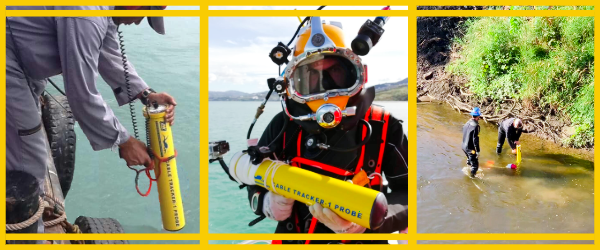
These details help determine whether the project calls for a handheld underwater metal detector, a cable tracker, a handheld magnetometer, or a boat-towed search system.
What Underwater Metal Detectors Can Help Locate
Underwater metal detectors can support many types of marine and underwater projects, including search and recovery, commercial diving, utility location, salvage work, and marine construction.
They may be used to locate lost tools, rings, anchors, chains, fasteners, fittings, hardware, weapons, evidence, debris, pipe, cable, or other metallic targets. For utility and marine construction work, detection equipment can also help crews follow buried cable paths, locate suspected breaks, identify steel or iron objects, and mark areas before repair or excavation begins.
Types of Underwater Detection Equipment
Not every underwater search calls for the same type of detector. The best option depends on the target, the bottom conditions, and the size of the search area.
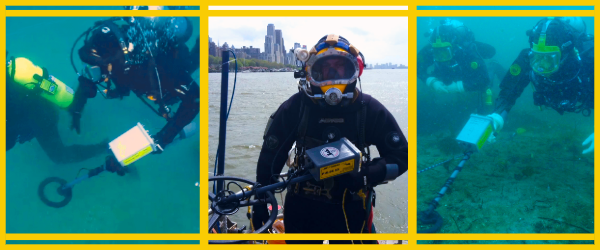
Handheld underwater metal detectors are often used by divers for smaller search areas and general metallic target location. They can be useful for recovery work, dock areas, shallow-water searches, and situations where the diver needs to scan closely around a specific area.
Cable trackers are used when the job involves locating or following underwater cable paths. These tools are especially useful for utility work, cable repair, and marine construction projects where crews need to identify the location of a buried or submerged cable before work continues.
Handheld magnetometers are used to locate ferrous metal, such as iron or steel. When a steel object is buried under mud, silt, or bottom material, a magnetometer can help identify the target even when it is not visible to the diver.
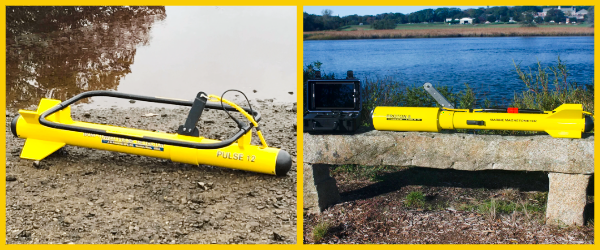
Boat-towed detection systems may be used when the search area is larger or when surface-based scanning is more practical than a diver-only search. These systems can support broader search and survey work where the target location is less certain.
 contact RTO to discuss your project requirements.