Hydraulic Water/Trash Pumps
Category Questions
What are hydraulic water and trash pumps used for?
Hydraulic submersible pumps are commonly used in construction, marine operations, dredging, industrial cleanup, utility maintenance, sewer work, flood control, and infrastructure projects. These pumps are designed to move water, sludge, sand, gravel, and debris-filled liquids in demanding environments where electric pumps may be less practical.
Why are hydraulic submersible pumps used in demanding environments?
Hydraulic pumps are commonly used in environments where durability, continuous-duty operation, and solids handling capability are important. Their hydraulic drive systems allow them to operate effectively underwater and in debris-filled environments encountered in construction, marine, dredging, and industrial applications.
Why is a no-priming pump design important?
Submersible centrifugal hydraulic pumps operate underwater and do not require manual priming before use. This helps reduce setup time and simplifies operation in demanding job site environments where rapid deployment is important.
What is the advantage of hydraulic pumps that can run dry without damage?
Many hydraulic submersible pumps are designed to tolerate dry operation without damaging internal components. This is especially useful in dewatering, dredging, trench work, and industrial cleanup applications where water levels may fluctuate during operation.
What types of materials can hydraulic trash pumps handle?
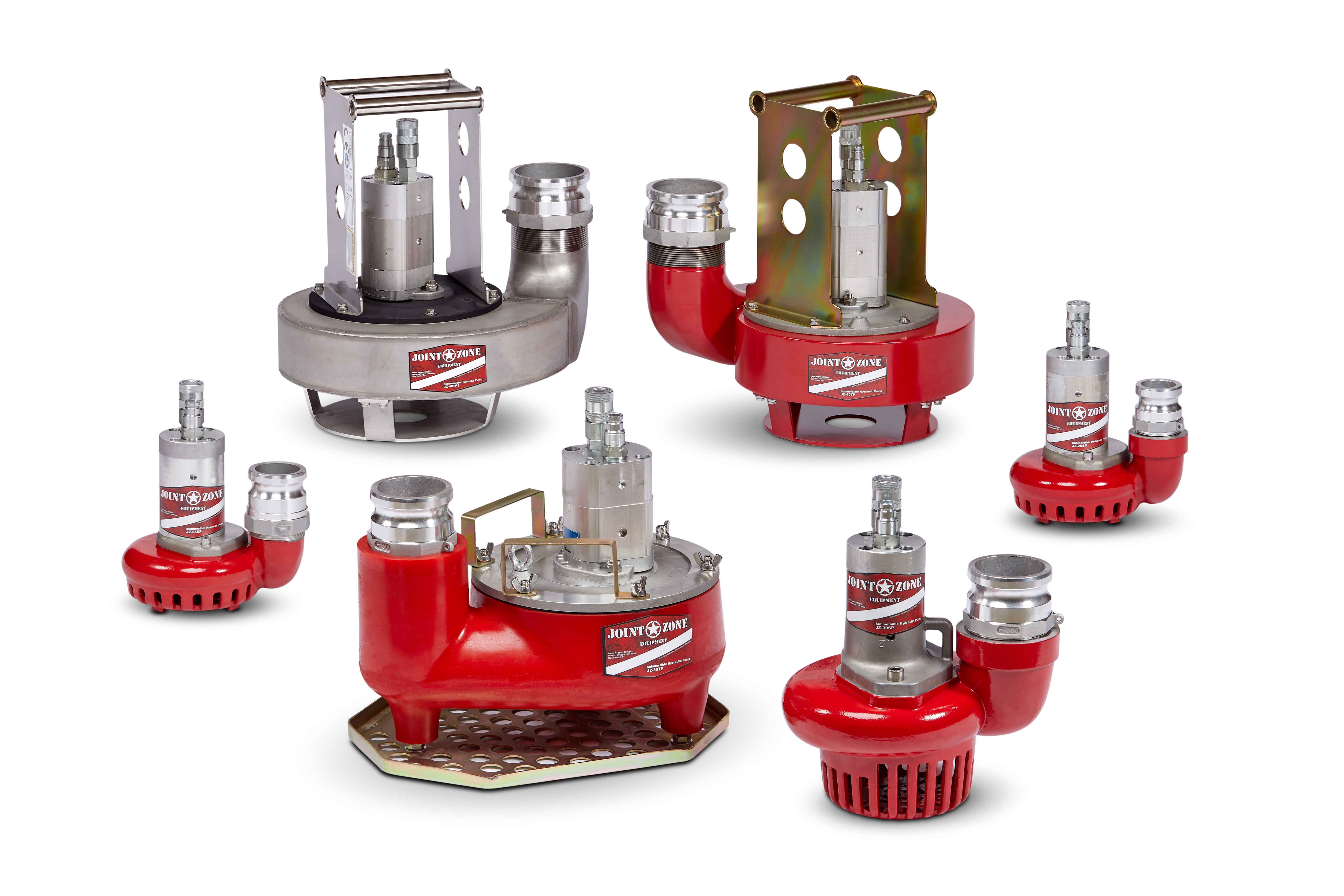
Trash pumps are specifically designed for pumping applications involving debris-filled liquids and slurry conditions. Models such as the Joint Zone 40TP and 40TPS are engineered for moving liquids containing significant solid content commonly encountered in dredging, septic work, muddy trenches, and industrial cleanup operations.




 $12,912.48
 $15,012.71
 $12,202.29