


The Role of High-Pressure Lift Bags in Structural Lifting and House Moving

How High-Pressure Air Lift Bags Improve Structural Lifting Safety
Structural lifting is never routine. Whether raising a house, supporting a foundation, shifting heavy loads, or performing recovery work, these operations involve rigid structures, tight clearances, and little margin for error. Traditional lifting methods such as hydraulics or mechanical jacks can be effective in some scenarios, but they are not always practical or safe in confined environments or when uniform load control is critical.
High-pressure air lift bags have become a trusted solution for structural lifting applications where precision, stability, and safety must work together. By delivering controlled lifting force across a wide contact area, pneumatic lift bags help reduce risk, simplify setup, and improve outcomes on complex lifting jobs. This article explores how high-pressure air lift bags support safer structural lifting, with particular relevance to house moving and similar structural applications.
What Is Structural Lifting?
Structural lifting refers to the controlled raising, supporting, or repositioning of rigid structures or heavy components. Unlike dynamic lifting performed with cranes or hoists, structural lifting typically involves incremental elevation over short distances, often in environments with limited access.
Common structural lifting applications include:
- House moving and foundation repair
- Structural support and leveling
- Load shifting beneath buildings or equipment
- Bridge, pipeline, and transformer lifting
- Heavy recovery and stabilization work
In these scenarios, maintaining load stability is just as important as achieving lift capacity. Uneven force, shifting contact points, or uncontrolled movement can compromise both the structure and worker safety. That is why equipment selection and lift planning are central to successful structural lifting operations.
Why High-Pressure Air Lift Bags Are Used for Structural Lifting
High-pressure air lift bags are specifically suited for structural lifting because they deliver large lifting forces while maintaining precise control. Unlike mechanical lifting systems that rely on fixed contact points, pneumatic lift bags distribute force across a broad surface area, reducing stress concentrations and improving stability.
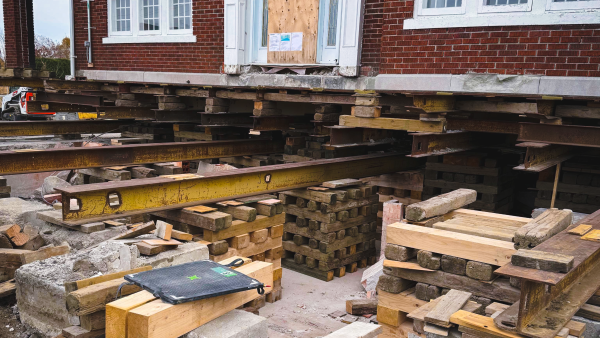
For house moving and similar projects, this capability is particularly valuable. Structures often rest close to the ground, leaving little clearance for traditional lifting equipment. High-pressure lift bags have a low profile when deflated, allowing them to be positioned beneath beams, slabs, or foundations with minimal excavation or disruption.
Once inflated, the bags provide smooth, incremental lift. Operators can raise a structure gradually, monitor movement, and adjust as needed. This controlled approach helps reduce tilt, cracking, or unintended load shifts that can occur when lifting rigid structures unevenly.
Flat-Form Lift Bag Design and Load Stability
One of the defining features of high-pressure structural lift bags is their flat-form design. Unlike rounded or pillow-style bags, flat lift bags maintain a level contact surface throughout the entire lift, even at full inflation.
This design offers several advantages for structural lifting:
- Reduced tilt risk: A flat surface helps keep loads level as elevation increases.
- Improved contact area: Expanded surface contact distributes force evenly across beams or slabs.
- Greater control: Flat-form bags respond predictably to incremental inflation, supporting precise adjustments.
In house moving applications, where maintaining alignment is essential to prevent structural damage, flat-form lift bags provide an added margin of safety. They help ensure that lifting forces remain uniform, even when working beneath long spans or uneven foundations.
Safe Stacking for Increased Lift Height and Capacity
Many structural lifting jobs require more lift height than a single bag can provide. High-pressure air lift bags are designed to be stacked safely when used correctly, allowing operators to achieve greater elevation without sacrificing stability.
Stacking is common in house moving and heavy structural support work, where incremental lifts are performed in stages. Properly designed lift bags feature interlocking or textured surfaces and integrated safety straps that help minimize shifting during stacked lifts.
When stacking lift bags, careful planning is essential. Operators must consider load distribution, lift sequencing, and inflation control. With the right equipment and procedures, stacking provides a reliable way to increase lifting capacity while maintaining the controlled characteristics that make pneumatic lifting effective.
Pneumatic Lifting Compared to Hydraulic and Mechanical Methods
Structural lifting has traditionally relied on hydraulic jacks or mechanical systems, both of which have limitations in certain environments. High-pressure pneumatic lift bags offer an alternative that can be cleaner, simpler, and more adaptable.
Key advantages of pneumatic lifting include:
- Low setup complexity: Lift bags require minimal supporting hardware.
- Reduced spark risk: Pneumatic systems eliminate many ignition hazards associated with mechanical or hydraulic devices.
- Cleaner operation: Air-powered lifting avoids fluid leaks and contamination.
- Cost efficiency: For temporary or specialized lifting jobs, air lift bags can be more economical than installing hydraulic systems.
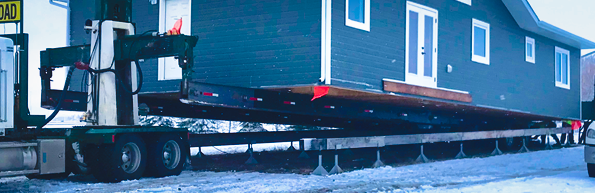
For house moving projects in residential or sensitive environments, these benefits are particularly relevant. Pneumatic lifting allows crews to work efficiently while minimizing disruption to surrounding structures and surfaces.
Best Practices for Structural Lifting with Air Lift Bags
While high-pressure air lift bags are powerful tools, their effectiveness depends on proper planning and use. Structural lifting should always begin with a thorough assessment of the load, lifting points, and site conditions.
Best practices include:
- Accurately estimating load weight and distribution
- Selecting lift bag sizes and quantities appropriate for the application
- Planning lift sequences to maintain balance and alignment
- Training operators in controlled inflation and monitoring techniques
- Incorporating safety buffers and redundant support where necessary
In house moving and foundation work, coordination between lifting crews and structural specialists is especially important. Careful execution helps ensure that lift bags enhance safety rather than introduce new risks.
Renting High-Pressure Air Lift Bags for Structural Lifting
Structural lifting projects are often specialized and intermittent, making equipment ownership impractical for many contractors. Renting high-pressure air lift bags provides access to professional-grade equipment without the long-term costs of storage, maintenance, and inspection.
Rental options allow crews to select the right bag sizes and configurations for each job, whether lifting a small residential structure or supporting a larger commercial load. Working with a knowledgeable rental provider also adds value through equipment guidance and application support.
Rental Tools Online offers high-pressure structural lift bags suitable for house moving, structural support, load shifting, and heavy recovery work. Our team helps ensure that contractors have the right lifting solution for their specific application, supporting safer and more efficient field operations.
Planning for Safer Structural Lifting
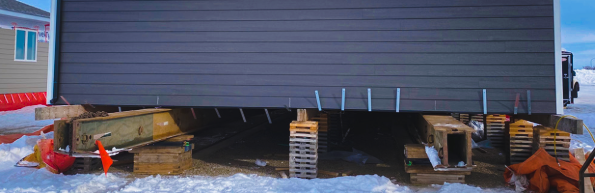
Structural lifting demands respect for both the forces involved and the environments in which the work takes place. High-pressure air lift bags have become a trusted tool for professionals who need controlled, stable lifting in low-clearance and high-risk situations.
By combining precise control, flat-form stability, and adaptable lifting capacity, pneumatic lift bags support safer outcomes across a wide range of structural lifting applications. For contractors planning house moving or structural support projects, understanding how and when to use these tools is a critical step toward successful execution.
If you have questions about selecting or renting high-pressure lift bags for your next structural lifting project, contact Rental Tools Online to discuss your requirements and available options.