


Underwater Hydraulic Drill Guide for Marine Construction and Repair
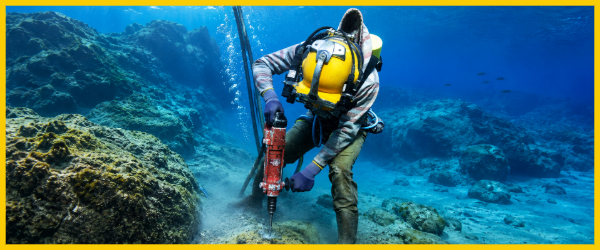
Underwater hydraulic drills are used by commercial divers, marine contractors, utility crews, and industrial maintenance teams for drilling, anchoring, core drilling, chiseling, and fastening support in wet or submerged environments. These tools are commonly used for marine construction, dock and pier repair, bridge maintenance, utility installation, underwater concrete drilling, and infrastructure work where electric tools may not be practical. RTO offers underwater hydraulic drill rental options for short-term and project-based work.
Underwater drilling projects can vary significantly. One job may require drilling anchor holes in concrete, while another may involve core drilling through a bridge support, working around a dock structure, or using a compact hydraulic tool for drilling and fastening support.
What Are Underwater Hydraulic Drills?
Underwater hydraulic drills are hydraulically powered drilling tools designed for use in wet, submerged, and heavy-duty environments. Depending on the tool, they may be used for hammer drilling, rotary drilling, core drilling, anchor hole drilling, chiseling, magnetic drilling, or drilling support during fastening work.
These tools operate from hydraulic flow supplied by a compatible power unit. Because the tool itself is powered hydraulically rather than electrically, hydraulic drills are well suited for commercial diving, marine infrastructure, utility work, and underwater construction environments.
Common categories include:
- Hydraulic hammer drills
- Hydraulic core drills
- Underwater magnetic drills
- Compact hydraulic drilling and fastening tools
- SDS MAX hammer drills
- Drill/chisel combination tools
The right choice depends on the material being drilled, required hole diameter, drilling depth, access around the work area, mounting method, and hydraulic system available on-site.
What Are Underwater Hydraulic Drills Used For?
Underwater hydraulic drills are used across marine construction, infrastructure repair, utility work, and underwater maintenance.
Common applications include:
- Anchor hole drilling
- Concrete and masonry drilling
- Underwater drilling in bridge, dock, and pier structures
- Marine construction and harbor repair
- Utility installation for conduit, pipes, or anchors
- Core drilling through concrete or reinforced materials
- Chiseling or light demolition support
- Offshore and industrial maintenance
- Drilling support for fastening or lag bolt work
- Wet, muddy, confined, or electrically sensitive work areas
In marine construction, a hydraulic hammer drill may be used to drill anchor holes into concrete or masonry. On a larger infrastructure job, a hydraulic core drill may be needed to create a clean, controlled opening for utilities or structural access. For steel work, an underwater magnetic drill may be the better fit when a precise hole is required in a submerged metal surface.
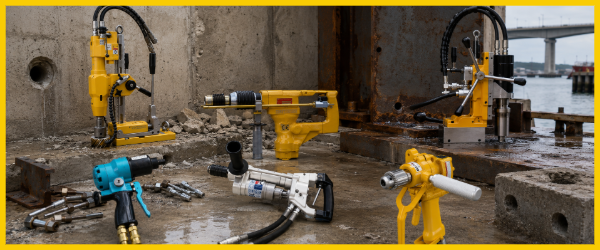
Choosing the Right Type of Underwater Hydraulic Drill
Not every underwater drilling job calls for the same tool. The best choice usually depends on the material, hole size, drilling method, and how much control the diver or operator needs at the work face.
Hydraulic Hammer Drills
Hydraulic hammer drills are usually the right starting point for anchor holes, smaller concrete openings, and drilling into masonry materials such as concrete, stone, brick, and block. They combine rotary drilling with impact energy, making them useful for dock repair, bridge maintenance, underwater construction, and general marine infrastructure work.
For many contractors, SDS MAX compatibility is a practical advantage because it allows the tool to accept common drill bits and chiseling accessories. This makes a hydraulic hammer drill a versatile option when the job may involve both drilling and light chiseling work.
Hydraulic Core Drills
A hydraulic core drill is the better choice when the project requires a larger, cleaner opening through concrete or masonry. Instead of hammering material out, a core drill removes a cylindrical section, which makes it useful for utility penetrations, conduit openings, pipe access, bridge work, pier repair, and other projects where hole size and accuracy matter.
For core drilling, the important questions are usually straightforward: What core diameter is needed? How deep is the opening? Will the drill be handheld, rig-mounted, or guided? The answers to those questions will narrow the tool and bit selection quickly.
Underwater Magnetic Drills
Underwater hydraulic magnetic drills are designed for drilling into submerged steel or other ferrous materials. They are most useful when the work requires a more controlled drilling setup on a metal surface, such as marine repair, structural modification, fabrication support, or maintenance on steel structures.
The key consideration is whether the drill can hold securely and be positioned correctly. Surface condition, material type, contact area, cutter size, and available space around the work area all matter before choosing a magnetic drill.
Compact Hydraulic Drilling and Fastening Tools
Some compact hydraulic tools can support smaller drilling-related tasks, fastening work, lag bolts, or rusted hardware removal. These tools are not a replacement for a dedicated hammer drill, core drill, or magnetic drill, but they can be useful when the job involves lighter-duty drilling support or mixed maintenance work.
Their main advantage is handling. A lightweight hydraulic tool can be easier to manage in tight areas or during underwater construction tasks where tool weight, diver control, and working clearance are major factors.
A Common Mistake When Selecting an Underwater Drill
One common mistake is treating all underwater drilling jobs the same.
A hammer drill, core drill, magnetic drill, and compact drilling tool solve different problems. A 2-inch anchor hole in concrete, a 14-inch core opening, and a drilled hole in submerged steel should not be approached with the same tool.
Hole size, material, drilling method, and how the drill will be positioned are often more important than simply choosing the most powerful option. In many cases, the best drill is the one that matches the required hole, bit or cutter style, and available working access.
Why Use Hydraulic Drills Underwater?
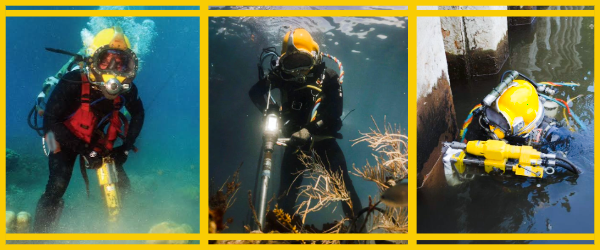
Hydraulic drills are widely used for underwater and wet-environment work because they provide strong drilling performance without relying on an electric motor at the tool.
They also allow the hydraulic power source to be positioned away from the immediate work area while hoses deliver power to the drill. This can be useful during marine construction, dock and pier work, bridge maintenance, utility projects, and industrial repair work where water, mud, or confined access may limit the use of standard electric tools.
Hydraulic drills can also offer a high power-to-weight ratio, durable construction, and reliable performance in demanding environments. Tool selection should still be based on the material, hole size, drilling depth, bit or cutter requirements, and hydraulic power source.
What Should Contractors Consider Before Renting?
Before renting an underwater hydraulic drill, contractors should consider:
- Material being drilled
- Required hole diameter
- Drilling depth
- Whether the job requires hammer drilling, core drilling, magnetic drilling, or fastening support
- Bit, cutter, or accessory requirements
- Available working clearance
- Hydraulic flow and pressure requirements
- Hose and coupler compatibility
- Whether the tool will be handheld, guided, or mounted
These details help determine whether the job is better suited to a hydraulic hammer drill, hydraulic core drill, underwater magnetic drill, or compact hydraulic drilling tool.
For underwater work, hydraulic hose length, coupler compatibility, and power unit matching are especially important. A drill may be capable of the work, but performance will suffer if the hydraulic setup does not match the tool requirements.
When Should You Rent an Underwater Hydraulic Drill?
Underwater hydraulic drills are specialized tools that may only be needed for a particular project, drilling task, or jobsite environment.
Rental can be practical for dock and pier repair, bridge maintenance, underwater concrete drilling, anchor hole drilling, marine construction, utility installation, core drilling, steel structure repair, and industrial maintenance work. It can also make sense when a project requires several drill types or backup equipment.
RTO helps contractors access underwater hydraulic drill options based on hole size, material, jobsite access, and hydraulic system compatibility.
Supporting Underwater Drilling Operations
Underwater drilling work can involve very different materials, hole sizes, and access conditions. A hammer drill that is well suited for anchor holes may not be the right choice for a large-diameter core, and a core drill may not be the right fit for drilling into submerged steel.
The best starting point is identifying the material, hole diameter, drilling method, available access, and hydraulic setup for the job.
Selecting the correct drill type, bit or cutter, and hydraulic power source helps crews work more efficiently and gives contractors a better chance of matching the tool to the actual demands of the project.
If you have questions about underwater hydraulic drills or need help selecting the right rental equipment, contact RTO to discuss your project requirements.