


Underwater Hydraulic Saw Guide for Marine Construction and Salvage
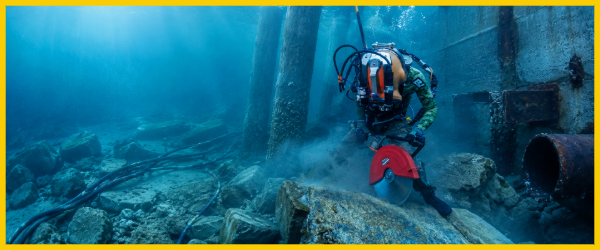
Underwater hydraulic saws are used by commercial divers, marine contractors, salvage crews, and underwater maintenance teams to cut concrete, timber, pipe, metal, composite materials, and submerged structures. Depending on the material and type of cut required, crews may use concrete chain saws, wood chain saws, band saws, cut-off saws, pipe-cutting systems, reciprocating saws, or hydraulic hacksaws. RTO offers underwater hydraulic saw rental options for short-term and project-based cutting work.
Underwater cutting projects vary widely. One job may involve removing a timber piling, while another requires cutting reinforced concrete, sectioning steel pipe, or removing damaged structural material during a salvage operation.
One of the first questions we ask about an underwater cutting project is simple: what exactly needs to be cut? A timber piling, reinforced concrete wall, and steel pipe can all require hydraulic cutting equipment, but they call for very different tools. Starting with the material, cut depth, and available access usually narrows the options much faster than starting with saw size or power alone.
What Are Underwater Hydraulic Saws?
Underwater hydraulic saws are hydraulically powered cutting tools designed for submerged cutting operations involving materials such as concrete, reinforced concrete, wood, pipe, steel, stainless steel, and other structural materials.
These tools operate from hydraulic flow supplied by a compatible power unit. Different saw designs are intended for different materials, cutting depths, shapes, and working conditions.
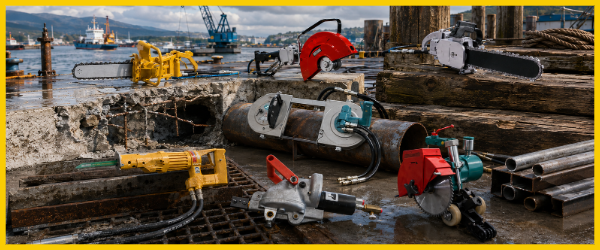
Common categories include:
- Concrete chainsaws
- Wood chainsaws
- Band saws
- Cut-off saws
- Reciprocating saws
- Hydraulic hacksaws
- Pipe cutting kits
The right choice depends on what the crew is cutting and how the cut has to be made. Access around the structure, cutting depth, cut shape, and the hydraulic system available on-site all matter.
What Are Underwater Hydraulic Saws Used For?
Underwater hydraulic saws are used across marine construction, salvage, infrastructure repair, underwater demolition, and maintenance work below the waterline.
Common applications include:
- Cutting timber pilings and dock structures
- Cutting concrete and reinforced concrete
- Creating mechanical openings in concrete
- Cutting steel and stainless steel pipe
- Removing damaged or obstructing structural material
- Sectioning wreckage during salvage operations
- Dock, bridge, and marine infrastructure repair
- Offshore maintenance
- Pipe repair and removal
- Underwater demolition and construction work
In marine construction, a diver may need a chain saw to remove a damaged timber piling. On another project, a concrete chain saw may be used to create a deep opening in a submerged concrete structure. Band saws, cut-off saws, hacksaws, and pipe-cutting systems solve different problems, so the tool choice should follow the actual cut rather than the broad category alone.
Choosing the Right Type of Underwater Hydraulic Saw
Concrete Chainsaws
Hydraulic concrete chainsaws are designed for deep cutting and plunge cutting in concrete and reinforced concrete. They are especially useful when contractors need to create mechanical openings, make controlled corner cuts, or cut deeper than a conventional circular blade allows. A concrete chain saw becomes particularly useful when depth and cut geometry matter. A cut-off saw may work well for a straight dimensional cut, but it is not always the best option when a contractor needs a deep plunge cut or an opening with more controlled corners.
For underwater concrete work, contractors should confirm the required cutting depth, the presence of reinforcement, chain and bar setup, and hydraulic compatibility before selecting the saw.
Wood Chainsaws
Underwater hydraulic wood chainsaws are commonly used to cut timber piles, bridge pilings, dock timbers, submerged wooden structures, and debris encountered during marine construction or repair work.
For timber, the decision is usually straightforward. If the job involves a large submerged wooden member, a hydraulic chain saw is often the most practical choice. Tool size, bar length, chain setup, and available working clearance still matter, especially when the diver is working around closely spaced pilings or structural members.
Band Saws
For pipe, tubing, and structural sections, a hydraulic band saw can provide a controlled cutting approach without the larger cutting arc of a rotating blade. Depending on the blade and saw configuration, band saws may be used on steel, stainless steel, specialty alloys, aluminum, copper, iron, fiberglass, plastic, and wood.
The main selection issue is access. The saw frame has to fit around the material, so contractors should confirm the outside diameter or cross-section of the workpiece and make sure there is enough room to position the tool properly.
Cut-Off Saws
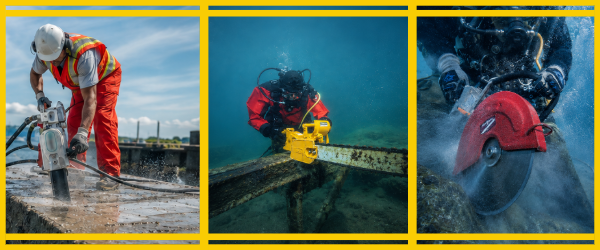
Hydraulic cut-off saws are versatile tools used for dimensional cutting of concrete, rebar, metal, stone, masonry, and other materials depending on the blade installed. They are commonly used in marine construction, salvage, infrastructure repair, and underwater demolition. A cut-off saw is often a good fit when the job requires a direct, controlled cut and there is enough clearance around the material for the blade and guard.
Blade selection is just as important as saw selection. Abrasive, diamond, and carbide-tipped blades are intended for different materials and working conditions.
Reciprocating Saws and Hydraulic Hacksaws
When clearance is tight or a rotating blade is awkward to position, reciprocating saws and hydraulic hacksaws can be the more practical choice. These tools are useful for pipe cutting, demolition, maintenance, and general heavy-duty cutting where chain saws or cut-off saws may not fit the work area or cutting angle.
They are also used in wet, underwater, and hazardous industrial environments where hydraulic power provides a dependable alternative to conventional electric tools.
Pipe Cutting Saw Kits
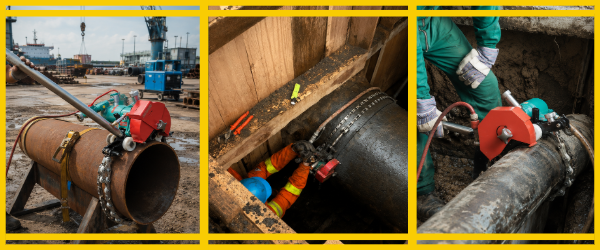
Pipe cutting may require specialized equipment depending on pipe diameter, wall thickness, material, access, and the type of cut required. Pipe-cutting saw kits may be used for steel pipe, process piping, marine infrastructure, pipeline repair, section removal, and controlled dismantling work.
For larger or more specialized pipe work, it is better to select the cutting method around the actual pipe geometry than to simply choose the most powerful saw available. Outside diameter, wall thickness, material, and access around the cut should all be confirmed before the tool is selected.
A Common Mistake When Selecting an Underwater Saw
One common mistake is choosing the saw based only on cutting power.
More power does not automatically make a tool better suited to the job. A high-capacity saw may still be a poor choice if the diver cannot position it properly around the material or if the blade, chain, or throat capacity does not match the cut. Material type, cutting depth, access, and hydraulic compatibility should all be considered together. In many cases, a smaller or more specialized saw is the better fit because it gives the diver better access and more control.
Why Use Hydraulic Saws Underwater?
Hydraulic saws are widely used for underwater work because they provide strong cutting power without relying on an electric motor at the cutting tool. They also allow the hydraulic power source to be positioned away from the immediate cutting area while hoses deliver power to the saw. This can be useful during marine construction, salvage, underwater demolition, and other operations where remote power delivery is practical.
Tool selection should still be based on more than power alone. Contractors also need to consider the material, cutting depth, access, hydraulic requirements, and cutting accessory.
When Should You Rent an Underwater Hydraulic Saw?
Underwater hydraulic saws are specialized tools that may only be needed for a particular project, material, or cutting task. Rental can be practical for marine salvage work, timber piling removal, underwater concrete cutting, pipe repair, dock and bridge projects, offshore maintenance, and short-term demolition work. It can also make sense when a project requires several saw types or backup cutting equipment.
RTO helps contractors access underwater hydraulic saw options based on material, cutting requirements, jobsite access, and hydraulic system compatibility.
Supporting Underwater Cutting Operations
Underwater cutting work can involve very different materials, access conditions, and cut requirements. A saw that is well suited for timber pilings may not be the right choice for reinforced concrete, steel pipe, or confined structural work. The best starting point is not simply asking which saw is the most powerful. It is identifying the material, the cut, the access conditions, and the hydraulic setup available for the job. Selecting the correct saw type, cutting accessory, and hydraulic power source helps crews work more efficiently and gives contractors a better chance of matching the tool to the actual demands of the project.
If you have questions about underwater hydraulic saws or need help selecting the right rental equipment, contact RTO to discuss your project requirements.